
Sensory processing challenges can significantly impact a child’s ability to engage with their environment, learn effectively, and build relationships. For many parents, watching their child struggle with sounds, textures, lights, or other sensory inputs can be both confusing and concerning. These challenges are common in children with autism spectrum disorder (ASD), but they can also occur independently. Navigating the complexities of sensory issues often requires specialized support—and that’s where ABA (Applied Behavior Analysis) can play a transformative role.
ABA is a well-established, evidence-based approach to understanding behavior and teaching functional skills. For parents seeking clarity and direction, ABA offers structured strategies to help children manage their sensory responses, build tolerance, and increase their participation in daily life. Whether your child is hypersensitive to noise, avoids certain textures, or has difficulty sitting still due to sensory overload, ABA can offer customized support plans that lead to meaningful progress.
This blog is designed to help parents understand how ABA can address sensory processing challenges in a practical, compassionate, and effective way.
Understanding Sensory Processing Challenges in Children
Sensory processing challenges occur when a child’s nervous system has difficulty receiving and responding appropriately to information from the senses. These senses include not just the commonly known five (sight, sound, touch, taste, and smell) but also proprioception (body awareness) and vestibular input (balance and movement). Children with sensory difficulties may be over-responsive, under-responsive, or seek excessive sensory input, which can lead to behaviors that may seem unusual or hard to manage.
Parents often notice early signs such as their child covering their ears in noisy environments, refusing to wear certain fabrics, or constantly seeking movement like spinning or jumping. These behaviors are not simply quirks—they often reflect the child’s attempt to cope with overwhelming or confusing sensory input.
Understanding these challenges is crucial because sensory issues can affect a child’s ability to learn, communicate, and participate in everyday activities. When left unaddressed, they can lead to frustration, meltdowns, and social isolation. Fortunately, ABA provides a structured approach that helps break down these behaviors, identify the underlying causes, and teach adaptive ways to respond to sensory input. Through this lens, parents can better support their child’s unique needs while also fostering growth and independence.
Related: Busting Common School Misconceptions About Autism
The Role of ABA in Addressing Sensory Sensitivities
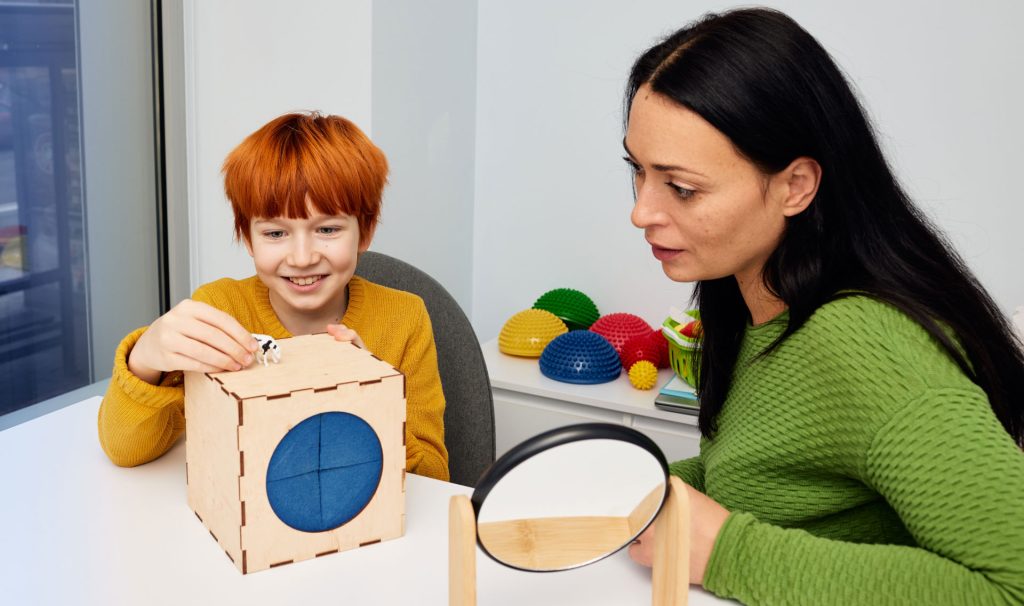
ABA plays a key role in helping children with sensory sensitivities by using data-driven methods to understand behaviors and create individualized intervention plans. The process begins with observing how the child reacts to various sensory inputs and determining which responses are adaptive and which may be disruptive or harmful. From there, ABA therapists design goals and teaching strategies aimed at building tolerance and teaching appropriate coping mechanisms.
For example, if a child becomes distressed by loud noises, ABA can gradually introduce the sounds at tolerable levels and reward calm behavior. This method, known as systematic desensitization, helps the child adjust in a safe, structured way. Alternatively, if a child avoids messy textures, ABA might introduce these gradually through play-based interventions, allowing the child to explore them in a low-pressure setting.
ABA is effective because it doesn’t just focus on the sensory issue itself—it focuses on the behaviors surrounding it. Therapists assess what the child is trying to communicate through their responses and teach replacement behaviors that are more functional. Over time, these consistent strategies help children reduce problem behaviors and engage more fully in their environment.
For parents, this means access to a proven framework that not only addresses the “what” of sensory challenges but also the “why,” leading to long-term growth and skill development.
Related: Helping Siblings Understand Autism: Tips for a Supportive Home
How ABA Therapists Identify Sensory Triggers
Identifying sensory triggers is a foundational part of any ABA-based intervention. ABA therapists begin by conducting a Functional Behavior Assessment (FBA) to understand what precedes and follows certain behaviors. This process helps determine whether a behavior is a response to sensory input, social interaction, or another type of trigger.
During assessments, therapists observe the child in various settings—home, clinic, school—and record patterns in behavior. For example, a child may cover their ears before a loud bell rings or display aggression when touching certain materials. These patterns are carefully analyzed to determine if they are consistent with sensory avoidance or seeking behaviors.
ABA therapists also gather input from parents and caregivers to gain a comprehensive view of the child’s day-to-day experiences. By combining observations with caregiver insights, therapists can build a detailed profile of sensory sensitivities and pinpoint exact triggers.
Once triggers are identified, therapists develop individualized plans to modify the environment or teach coping skills. For instance, if fluorescent lighting is overstimulating, the therapist may recommend dimmer alternatives or scheduled breaks in calmer settings. These adjustments, coupled with direct behavior interventions, help children become more aware of their sensory needs and how to manage them appropriately.
Related: The Benefits of On-Site Diagnostic Assessments in ABA Therapy
Techniques ABA Uses to Build Sensory Tolerance
Building sensory tolerance is a gradual process, and ABA provides structured techniques that help children increase their comfort with overwhelming stimuli. One common approach is “exposure therapy,” where a child is gently and repeatedly exposed to a sensory input they find difficult. Over time, and with positive reinforcement, their tolerance builds and their negative reactions decrease.
Reinforcement is another powerful tool. ABA therapists use positive reinforcement to encourage desired responses to sensory experiences. For example, if a child touches a new texture without withdrawing or crying, they might receive praise, a favorite toy, or another reward that motivates continued participation.
Another technique is pairing. In this method, therapists associate a disliked sensory input with a highly preferred activity. For example, if a child dislikes brushing their teeth due to oral sensitivity, it might be paired with a favorite song or visual timer to increase cooperation.
Task analysis and chaining are also used to break down overwhelming activities into smaller, manageable steps. A child who is sensitive to grooming might start with tolerating a brush near their hand before progressing to full brushing. Each step is reinforced and practiced until the child becomes comfortable.
Through these methods, ABA helps children gradually learn to tolerate, and even enjoy, activities that once caused discomfort or distress.
Related: Demystifying School-Based ABA Services
Creating Sensory-Friendly Environments at Home with ABA
Creating a sensory-friendly environment at home is essential for children facing sensory challenges, and ABA offers guidance for parents to make effective adjustments. These changes not only reduce behavioral outbursts but also create a more calming, structured space where children can thrive.
Here are some ABA-informed strategies to create a sensory-supportive home:
- Designate quiet zones: Establish areas where your child can retreat when overstimulated. Include calming items like bean bags, noise-canceling headphones, or soft lighting.
- Use visual schedules: Clear visual cues help reduce anxiety and prepare the child for upcoming sensory experiences.
- Incorporate sensory tools: Items like weighted blankets, fidget toys, or tactile bins can meet sensory-seeking needs safely.
- Modify lighting and sound: Swap harsh lights for soft lamps and minimize background noise with white noise machines or quiet zones.
- Provide movement breaks: Scheduled opportunities for jumping, stretching, or swinging can help regulate sensory input throughout the day.
- Limit overwhelming stimuli: Keep spaces decluttered and visually simple to prevent sensory overload.
With ABA’s individualized approach, these adjustments can be tailored to your child’s specific needs, ensuring that your home supports both comfort and progress.
Parent Involvement in ABA Strategies for Sensory Support
Parents play a vital role in the success of ABA interventions, especially when addressing sensory challenges. ABA programs are most effective when strategies are consistently applied both during therapy sessions and at home. Empowering parents with knowledge and hands-on tools ensures long-term progress and helps children generalize skills across environments.
Ways parents can be involved in ABA-based sensory support include:
- Participating in training sessions: Learn how to use reinforcement techniques and manage sensory behaviors effectively.
- Practicing interventions at home: Reinforce exposure routines and calming strategies taught during therapy sessions.
- Tracking behavior patterns: Record triggers, responses, and improvements to share with the therapy team for more tailored adjustments.
- Collaborating on goals: Work with ABA therapists to set realistic and meaningful goals based on daily challenges.
- Creating consistency: Use the same language, prompts, and reinforcements used in therapy to avoid confusion.
- Advocating for their child: Share insights with educators and medical providers to ensure a unified support system.
Parent involvement not only strengthens the child’s progress but also builds parental confidence in managing sensory difficulties with purpose and compassion.
For parents seeking expert guidance in navigating sensory processing challenges through ABA, Spark Behavioral Solutions & Consulting Services in Frisco, Texas offers comprehensive and compassionate support. Founded and led by Maidelina Nazario Romero, a highly experienced professional with over seven years of expertise in behavior analysis, Spark provides individualized programs for children and adults with developmental delays, autism, and related disorders.
Maidelina’s passion for helping individuals thrive extends across clinical, school, home, and community-based environments. Families in the Frisco area can trust Spark Behavioral Solutions & Consulting Services to deliver evidence-based, results-driven ABA strategies tailored to each child’s unique sensory needs.