
Parenting comes with countless joys, challenges, and opportunities to help your child grow and thrive. For families raising children with developmental delays or autism, Applied Behavior Analysis (ABA) has become a trusted approach to support skill-building and address behavioral challenges. Often seen as a therapy conducted in clinics or with specialist guidance, ABA techniques can also be adapted to fit naturally into your daily routines at home.
By integrating these methods into everyday activities, you can create opportunities for learning, positive reinforcement, and meaningful interactions, all while maintaining the flow of your family’s life. This guide will explore practical strategies to help you incorporate ABA seamlessly into your daily routine, empowering you to enhance your child’s development in ways that feel rewarding and manageable.
What is ABA? Understanding the Basics of Applied Behavior Analysis

Applied Behavior Analysis (ABA) is a science-based approach to understanding and improving behavior. Rooted in learning theory, ABA examines how behaviors are influenced by the environment and the consequences that follow. For parents, this means it provides strategies to encourage helpful behaviors while reducing those that hinder a child’s growth or learning.
The core of ABA lies in positive reinforcement—offering meaningful rewards to encourage desirable actions over time. For example, if a child communicates effectively or completes a task, they might receive praise, a preferred activity, or another reward. This builds an association between the behavior and positive outcomes, increasing the likelihood of it occurring again.
ABA also uses the “ABC” model—Antecedent, Behavior, and Consequence—to understand behavior. By observing what triggers a behavior and what follows it, parents can work to influence patterns in a constructive way. For instance, if a tantrum occurs when screen time ends, providing consistent rules and a calm transition plan can better manage the behavior.
While ABA is widely known for supporting children with autism, its principles can benefit any child. By integrating ABA techniques such as positive reinforcement and structured routines into daily life, parents can foster communication, independence, and meaningful connections with their children, creating opportunities for growth in even the simplest moments.
Related: The Role of Parents in ABA Therapy: A Collaborative Approach
Identifying Functional Goals for Your Child
Identifying functional goals is an essential first step in helping your child build independence and meaningful skills. Applied Behavior Analysis (ABA) focuses on creating specific, achievable targets tailored to your child’s unique abilities and needs. Functional goals aim to develop skills that are directly applicable in everyday life. Here’s how parents can set and prioritize these goals:
Steps to Identify Functional Goals:
- Assess daily routines: Begin by observing areas where your child may need more independence, such as getting dressed, eating, or participating in family activities.
- Collaborate with professionals: Work with a Board Certified Behavior Analyst (BCBA) to conduct assessments and identify behaviors to strengthen or reduce.
- Focus on practicality: Goals should directly improve your child’s daily life, such as better communication, self-care, or cooperative play.
- Break down larger goals into smaller steps: Teaching a child to independently dress, for instance, can be broken into sub-goals like pulling on socks or fastening buttons.
Examples of Functional Goals:
- Use utensils independently during meals.
- Follow basic directions like “Put your shoes on.”
- Transition between tasks without disruptive behavior.
- Use polite requests, such as “Can I have a toy?”
By setting realistic targets and tracking progress, you can help your child develop skills that not only enhance everyday functioning but also foster their confidence and social interactions.
Related: How We Incorporate Play into ABA Therapy: Making Learning Fun
Embedding Learning Opportunities into Daily Activities
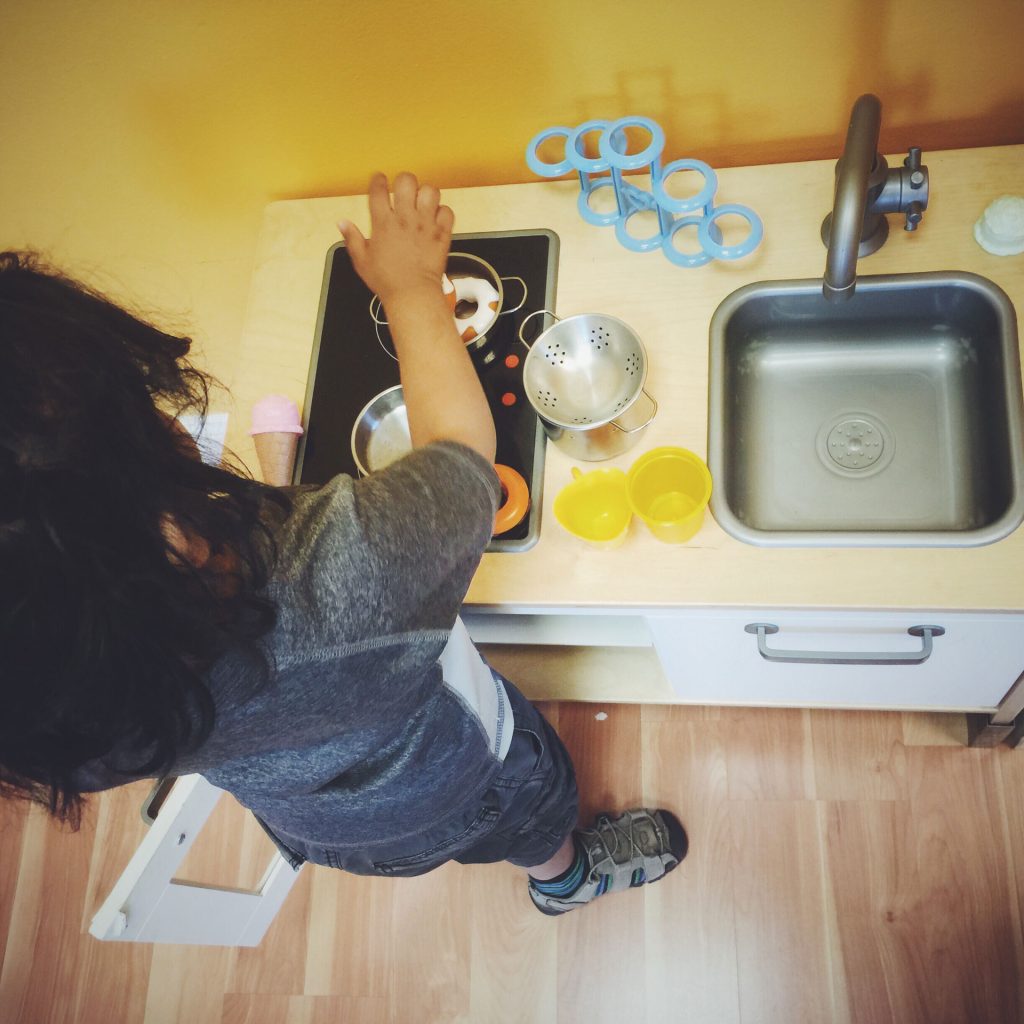
Embedding learning opportunities into daily activities allows children to naturally develop essential skills in a relaxed, familiar environment. Using ABA (Applied Behavior Analysis) principles, parents can transform everyday moments into meaningful teaching opportunities. Here’s how to incorporate these strategies:
Practical Strategies to Embed Learning:
- Use mealtimes for communication practice
- Encourage your child to request items, like “spoon” or “drink.”
- Label foods to build vocabulary and use descriptive language, such as size or color.
- Turn household chores into learning moments
- Ask your child to follow simple instructions, such as putting clothes in the laundry basket or sorting items by color.
- Use counting or patterning during cleanup tasks for math skill development.
- Make playtime educational
- Play games that teach turn-taking and sharing, fostering social skills.
- Engage in pretend play to encourage creativity and practice social phrases like “Can I have this?”
- Utilize outings for real-world learning
- Identify shapes, colors, and objects during a walk or grocery shopping.
- Teach safety by practicing looking both ways before crossing the street.
Benefits of Daily Embedding:
By integrating ABA techniques into everyday routines, children strengthen communication, social, and problem-solving skills while generalizing behaviors to natural environments. These small, consistent practices build confidence and independence in a fun, engaging way.
Related: School ABA Intervention: What You Need to Know
Using Positive Reinforcement Effectively
Positive reinforcement is a key principle of Applied Behavior Analysis (ABA) and a powerful tool for shaping and encouraging desired behaviors in children. It involves rewarding a child immediately after they exhibit a behavior you want to see more often, making it more likely for the behavior to occur in the future. Reinforcements can range from verbal praise and high-fives to tangible rewards like a favorite toy or preferred activity. Importantly, the reinforcer must be something meaningful to the child, as its effectiveness depends on individual preferences.
Parents can incorporate positive reinforcement naturally into daily routines to promote skill development and improve behavior. For example, if a child plays calmly with a sibling, offering praise such as “Great job sharing!” reinforces the behavior and builds social skills. Similarly, rewarding small steps in difficult tasks, like learning to dress independently, encourages perseverance and progress. Timing is crucial—reinforcement should follow the behavior closely to strengthen the association between the two.
Positive reinforcement also fosters a supportive home environment, boosting a child’s self-esteem and reinforcing the parent-child bond. By focusing on rewarding what children are doing right rather than punishing missteps, parents not only teach valuable life skills but also create a positive and motivating atmosphere that encourages growth and cooperation.
Related: Why We Believe in Igniting a Love for Learning in Children with Special Needs
Teaching Communication Skills Through Routine Interactions
Teaching communication skills through routine interactions not only builds a child’s ability to express themselves but also deepens connections within the family. Applied Behavior Analysis (ABA) principles can seamlessly integrate into everyday activities, creating consistent opportunities for meaningful communication. By focusing on both verbal and nonverbal skills, parents can foster improved dialogue and social engagement with their child.
One effective approach is breaking communication into manageable steps. For instance, during mealtimes, parents can encourage their child to request items like utensils or water by modeling the desired language, such as saying, “May I have a fork?” Prompting the child, then gradually reducing these cues over time, strengthens their ability to fulfill these interactions independently. Reinforcing successes with praise or rewards, such as a smile or a favorite activity, further motivates repetition of these behaviors.
Routine outings, like grocery shopping or park visits, offer natural opportunities for social dialogue. Parents can enhance vocabulary by narrating their own observations or asking open-ended questions, such as “What color is this fruit?” or “What do you see over there?” This embeds learning into familiar contexts, making the interaction more engaging and effective.
By integrating communication practice into daily routines, parents not only support skill development but also create a supportive, nurturing environment where children thrive socially and emotionally.
Managing Challenging Behaviors Using ABA Strategies
Managing challenging behaviors can feel overwhelming for parents, but Applied Behavior Analysis (ABA) provides effective strategies to address these obstacles and foster positive outcomes. ABA techniques focus on understanding the function of behaviors—whether they serve to gain attention, avoid tasks, or fulfill sensory needs—and replacing them with constructive skills. By consistently applying reinforcement and developing individualized Behavior Intervention Plans (BIP), families can see meaningful change.
For instance, teaching replacement behaviors is key. Instead of letting a child act out by throwing objects when frustrated, ABA may encourage the use of adaptive communication tools such as saying “help” or pointing to a picture. Identifying triggers, such as loud environments, allows families to implement strategies like using noise-canceling headphones or visual reminders to decrease problem behaviors. Through reinforcement, positive behaviors are encouraged, promoting long-term changes that help the child build independence and emotional regulation.
Maidelina Nazario Romero, founder and head of Spark Behavioral Solutions & Consulting Services in Frisco, Texas, brings extensive expertise to families facing these challenges. With over seven years of experience in clinical, school, home, and community-based settings, Maidelina is committed to supporting children and adults with developmental delays, autism, and related disorders. Contact Spark Behavioral Solutions & Consulting Services to create a plan tailored to your child’s success and growth.